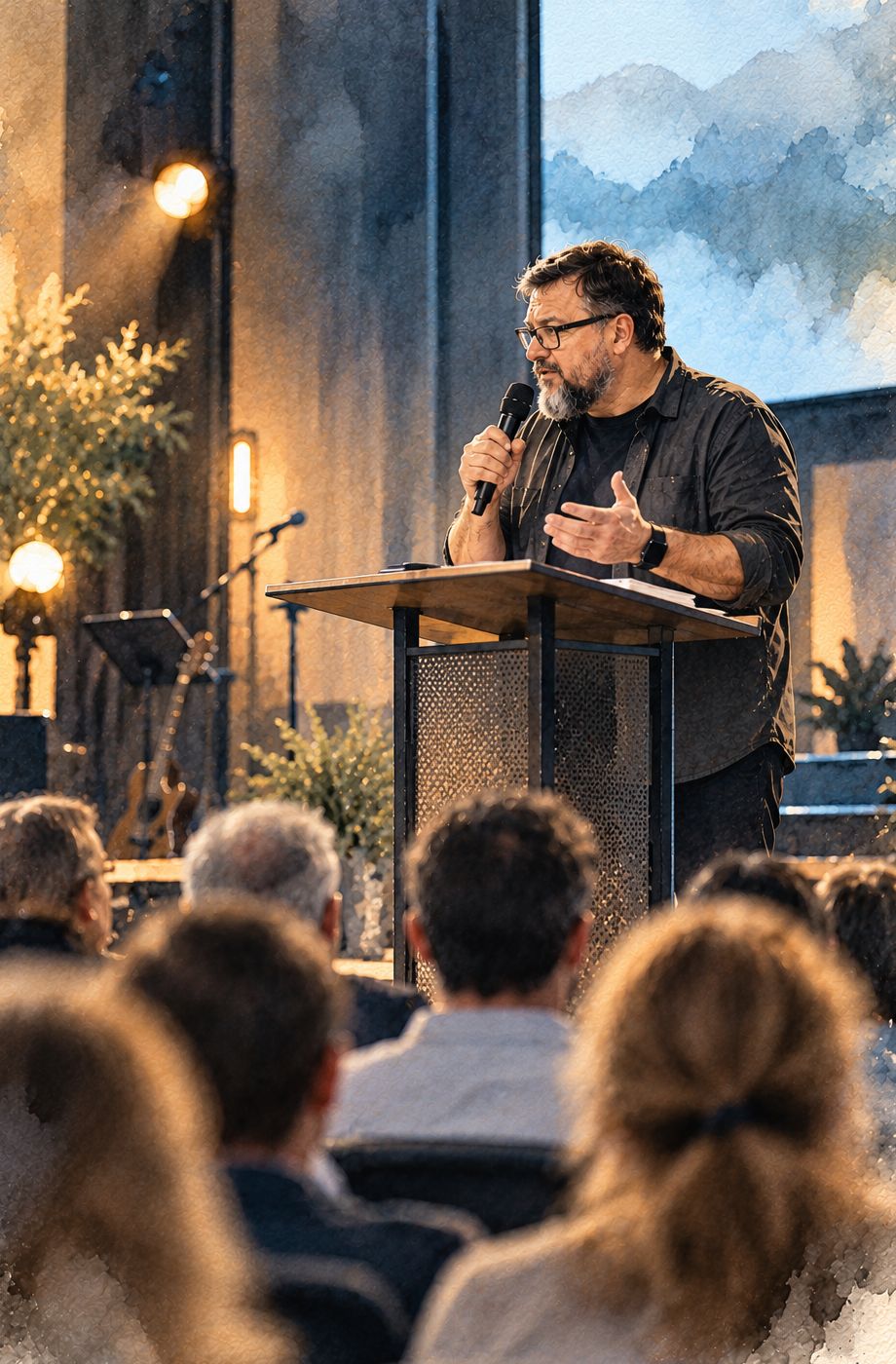
“Being a Man” Conference Held in Phuket
On November 22 in Phuket, 45 men talked about calling, purpose, a father’s legacy and partnership. A year-long “50 Habits of a Father” training began right after the conference.
Read →
God can do anything! This is one of our most important statements. Of course, people ask us about limits on what God can do, and we will discuss those a little further on. For now I want to talk a bit about His omnipotence.
The original text of the Bible has no separate word for "almighty." Yet all His names and titles, in both the Old and the New Testament, tell us that He is almighty. Let us take a look.
The first and main word is אֵל שַׁדַּי (El Shaddai). Since the etymology of this word is disputed, we have several meanings, none of which contradicts the essence.
The first comes from שָׁדַד (shadad), "to overpower, to crush," meaning the All-Powerful, the Invincible. The second comes from the Akkadian šadû (shadu), "mountain," meaning God who is unshakable like a mountain. The third comes from שַׁד (shad), "breast," meaning the One who nourishes and gives fullness. And the fourth comes from the rabbinic reading "she-dai": the One who is self-sufficient.
The second name of God is אֱלֹהִים (Elohim), "God." This word is plural. Some take this as a sign of polytheism, others as a "royal" plural, like "We, Nicholas the Second." Literally, it is the plural of the word אֱלוֹהַּ (Eloah), "God." Related words exist in other Semitic languages, for example the Arabic "Allah."
The word Eloah is traced back to the root אול (ul): to be strong, first, in front. This points to the fact that He was First and created everything.
The third name of God is אֵל גִּבּוֹר (El Gibbor): God the Warrior, the Hero, strong, brave, mighty. It is understood as the Victor, and in an absolute sense.
Another little-known name is אֲבִיר (Avir): the Mighty, the Strong. Etymologically this word is connected with the beat of a wing and speaks of a strength able to lift into the sky.
The second best-known name of God is יְהוָה צְבָאוֹת (Yahweh Tsevaot). Its meaning needs to be unpacked word by word. Yahweh is the One who Is, the One who always exists. The Masoretes gave these four letters the vowels of the word "Adonai" so that the reader would not pronounce the name of God. Reading the letters mechanically with these vowels produced the word "Jehovah" in the Middle Ages. The second word, Tsevaot, is the plural of צָבָא (tsava), "army, host." The verb צָבָא (tsava) means "to go out as an army." The name is understood as the Commander-in-Chief.
Let us look at one more name: עֶלְיוֹן (Elyon), the Most High, above all, supreme authority over everything.
And the last word we will consider is אֲדֹנָי (Adonai): Lord, Master, Owner, the One to whom everything belongs. In ancient everyday speech the word אָדוֹן (adon), from which "Adonai" is formed, referred to someone who owned slaves. The form "Adonai" itself is used in the Bible only of God. It too speaks of omnipotence.
Now let us look at the Greek equivalents the New Testament gives us. First of all, παντοκράτωρ (pantokrator), the Almighty: πᾶς "all" + κρατέω "to hold power." That is, the One who holds everything in His power. This is active rule over all things, not merely an ability. It is thanks to this word that we have the words "Almighty" and "All-Ruler."
The second word worth considering here is δυνατός (dynatos): Mighty, able. It says precisely that God can do anything, that everything is within His power.
There are several more Greek words that speak of God's omnipotence, but we will not list them all here, or we would end up with a whole book.
So, God can do anything! This means that nothing at all is impossible for Him. He has no limits except moral ones, which come from His nature.
One of the main components of His omnipotence is the ability to create. Literally: to make what does not exist and never existed. At the same time He creates harmony both within creation and between created things. Besides that, God can change and transform what already exists, and also destroy and undo. His power over being includes power over non-being. Do you remember what is written?
But rather fear Him who is able to destroy both soul and body in hell.
Matthew 10:28
And the last thing worth saying here: Almighty God is able to preserve and sustain what He has created in existence. He is the source of eternal life.
Nor is there any action He could not perform or that would be beyond His reach. This means that His will and His action coincide: there is no gap between "wanted" and "did," He does what He wills. Omnipotence also means that He can choose to do nothing, because being able to do something and refraining from it is also part of power.
Omnipotence implies that action costs God nothing. He does not strain Himself. Nothing requires extraordinary effort from Him. Creating the Earth did not take 13% of His strength, and casting Satan out of heaven did not take even 1%. For God everything is easy.
He needs no helpers, because He can do everything Himself. Nor does He lack resources. He needs no intermediaries, tools or suitable conditions.
And something very interesting: God does not need time to do anything, because He does everything instantly, with no delay between decision and result. Instantly! When we see such a delay, it is not because He cannot do something, but because we are not ready, not fit for it, or do not understand well enough why.
God's omnipotence means that He never grows tired. His might and strength are inexhaustible. His power never diminishes with use; God knows no weariness.
God's omnipotence is also about the fact that He depends on no one and nothing. He is absolutely self-sufficient and independent. He needs no one in order to feel significant or needed. And God never meets resistance He could not overcome.
One more important aspect of omnipotence: He gives strength to others without losing His own.
And the last thing I would like to say about God's omnipotence: He is able to limit Himself voluntarily. Only the Almighty can limit Himself without being limited from outside. And now we come to the question of what is impossible for God, of His limits.
All of God's limits are self-limits, because they are the limits of His nature. God does no evil: it contradicts His nature, because He is good. He does not sin, because He is holy. It is not that He cannot, but that He will not. Nor does God violate the freedom He has given us, because it is His gift.
So, omnipotence is the unlimited, independent, inexhaustible ability to act according to His own will: to create, change, preserve and undo, and also to limit Himself voluntarily. In a human being it is possible only as an illusion or as a feeling, and maturity begins with giving up that illusion.
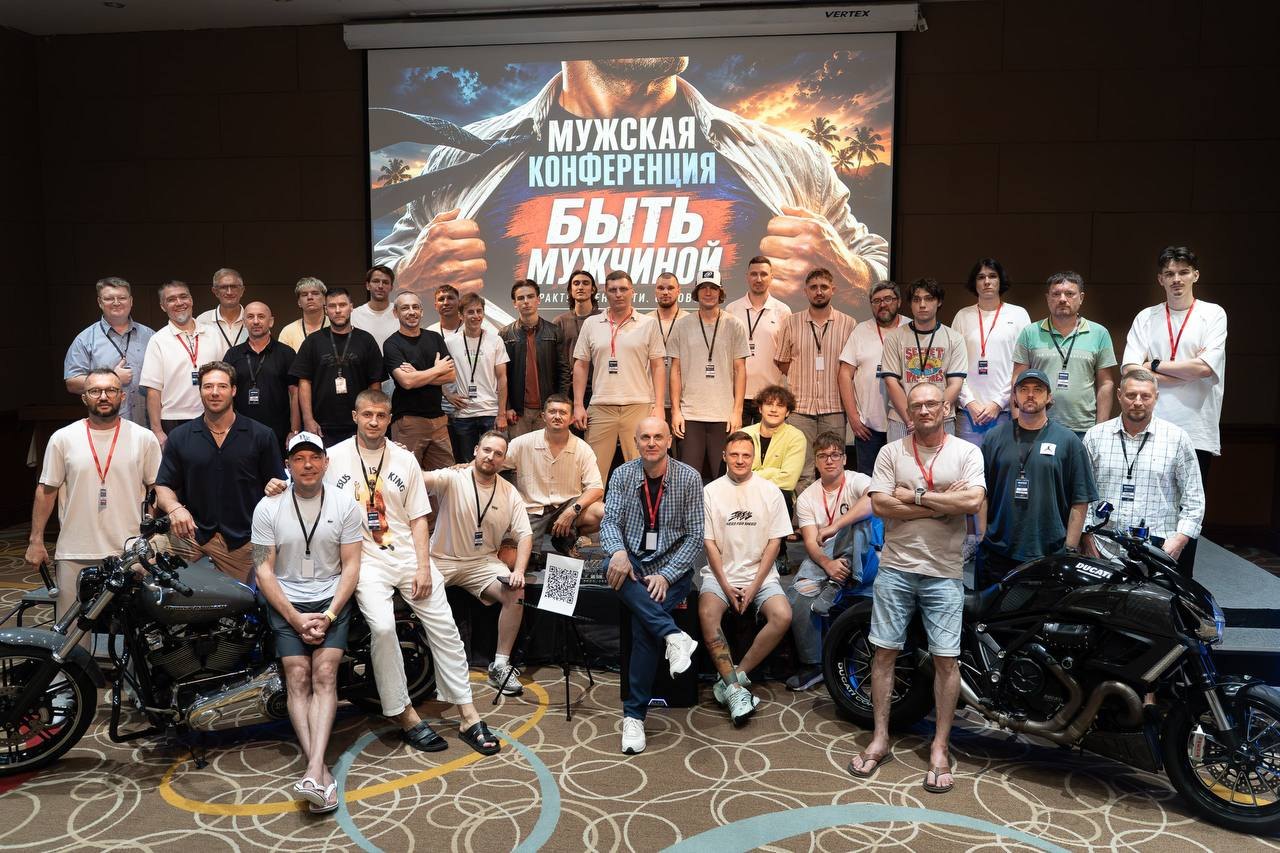
On November 22 in Phuket, 45 men talked about calling, purpose, a father’s legacy and partnership. A year-long “50 Habits of a Father” training began right after the conference.
Read →
Why resentment should never be stored up, how it distorts the way we see our spouse and grows into contempt, what research says about forgiveness, and what to do so the sun does not go down on our anger.
Read →
Why a marriage becomes overgrown with weeds when no one tends it, the five pillars of a living relationship according to research, and how to bring back your first love through “the first works.”
Read →